ServicesConstruction Debris Removal
Construction Debris Removal in Orlando
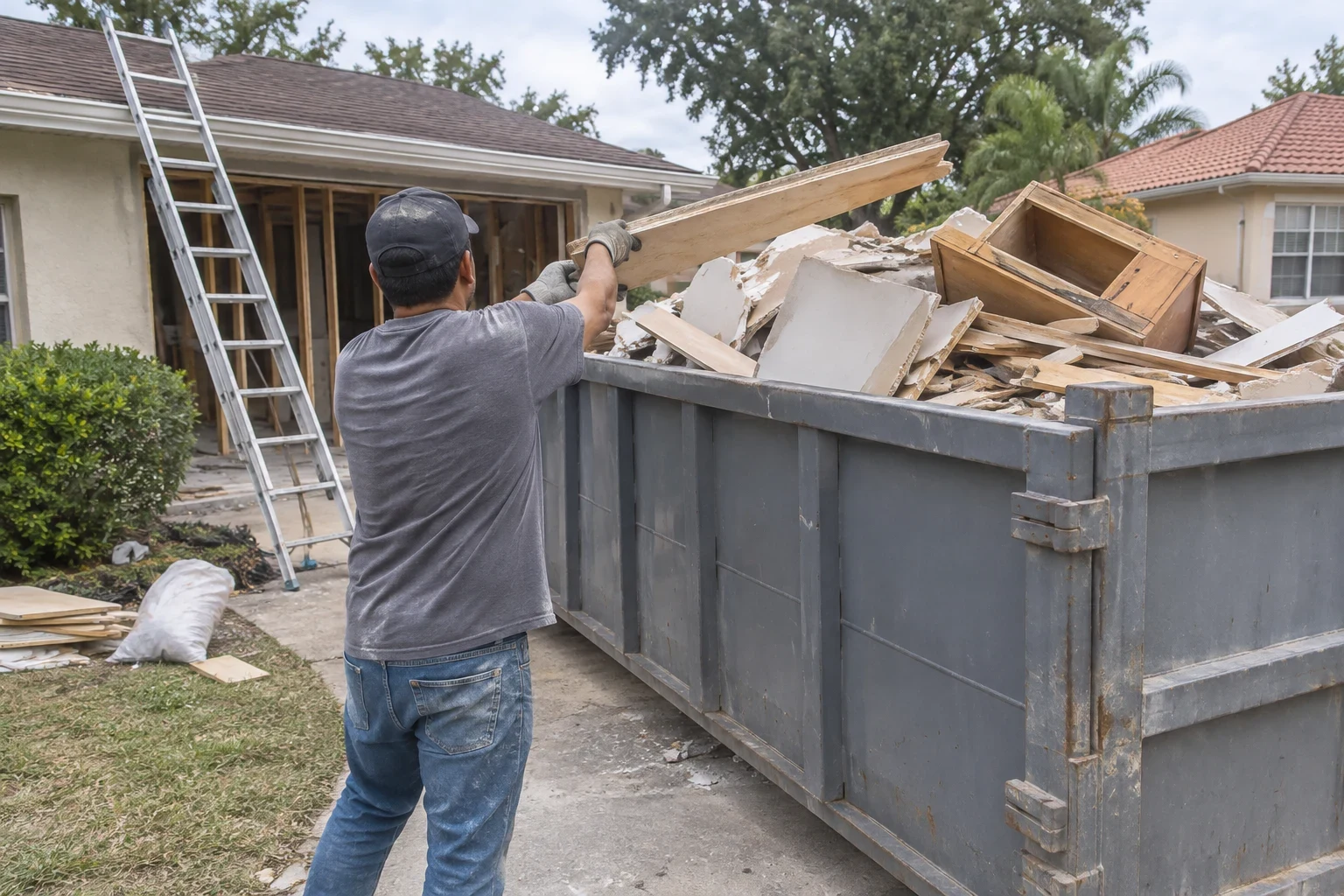
Torn-out drywall, nail-studded lumber and broken tile shouldn't sit in piles where people walk. We deliver a dumpster sized for your debris, place it where crews can load it safely, and haul it away when it's full.
Clearing heavy debris without the hazards
Construction debris removal keeps a remodel or build from burying itself. We drop a roll-off dumpster sized for what you're tearing out, swap it when it fills, and haul away the drywall, lumber, shingles, tile and concrete so the work area stays open.
Safety shapes how we plan every job. Most injuries on a small site come from loose scrap: a board with nails pointing up, a stack of broken tile against a wall, a pile someone has to climb past. When the container sits close to the work and the debris goes straight in, there are fewer trips across a cluttered yard and less sharp material where kids and pets can reach it.
This service fits homeowners partway through a kitchen or bath remodel, roofers handling a tear-off, and contractors running a build anywhere from Conway to Meadow Woods. For a simple garage or attic cleanout, see our Roll Off Dumpster Rental page, and businesses that need regular trash pickup should look at Front Load Dumpster Service.
What our debris removal includes
- A container matched to the weight
- Concrete, tile and roofing shingles reach a container's weight limit long before they fill it. We ask what's coming out and suggest yard sizes that keep the load safe to lift and legal to haul.
- Placement planned before delivery
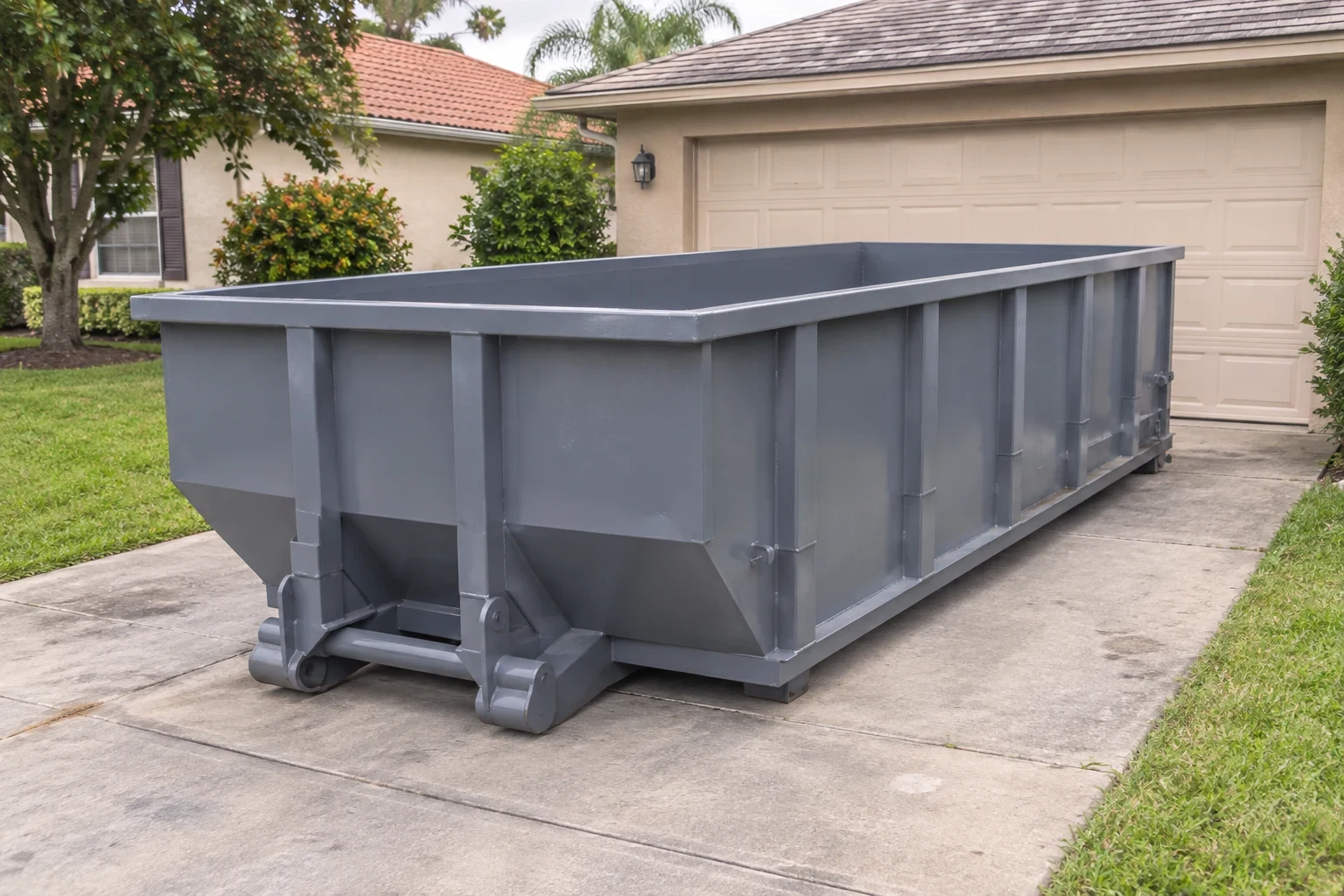
- We talk through where the dumpster will sit: level ground, clear of overhead wires and branches, out of the way of driveway traffic and close to the work. Boards under the rails can help spread the weight on a driveway.
- Swap-outs on longer jobs
- When a container fills, we pick it up and drop an empty one. Debris never has to pile above the rim or spill onto the lawn while you wait.
- Plain loading guidance
- Heavy material goes low and spread evenly, nothing rides above the top edge, and the rear door stays latched. A balanced load protects your crew while loading and our driver while hauling.
- A clear list of what can't go in
- Paint, solvents, batteries, tires and similar items usually can't ride in a debris load. We go over it on the call so nothing has to be pulled back out later.
Signs your project needs a debris container
Piles are growing in the yard
If torn-out material is stacking up beside the house or garage, it's already a tripping hazard. A container gives it one place to go.
A roof tear-off is scheduled
Old shingles come off fast and land everywhere. Having a dumpster placed near the eaves keeps nails and granules out of the grass and flower beds.
Sharp scrap is near walkways
Lumber with exposed nails, cut metal and broken glass don't belong where family members, neighbors or delivery drivers walk.
Afternoon storms keep soaking the debris
Wet drywall and insulation get heavy, start to smell and can grow mold within days in Florida's summer rain. Getting it into a container and hauled away keeps the mess from spreading.
Dump runs are eating your workday
Hauling truckloads yourself means lifting heavy debris twice and losing hours on the road. One container and a scheduled pickup frees that time for the project.
What affects the cost of debris removal
Your price comes down to what you're throwing out and how long the work runs. We walk through each factor on the phone so you know what's included and what could add to it before delivery day.
Type and weight of debris
Heavy loads like concrete, brick and shingles cost more to haul than lighter lumber or drywall. Mixed loads are fine, but knowing the mix helps us quote accurately.
Container size
Larger yard sizes hold more but aren't always the right call for dense material. We size for the debris, not just the volume.
Rental length and swap-outs
A weekend bathroom gut needs one container. A multi-week remodel may need several swaps, and each one figures into the total.
Access and placement
Tight driveways, soft ground or placement on the street can affect delivery and may need extra planning or permission.
Overfilled or restricted loads
Debris piled above the rim or items that aren't allowed can add charges at pickup. Following the loading guidance keeps the cost where you expect it.
How a debris removal job runs
- 1
Talk it through by phone
Tell us what you're removing, roughly how much, how long the work will last and where the container could sit. We recommend a size and explain the quote before anything is scheduled.
- 2
Delivery and safe placement
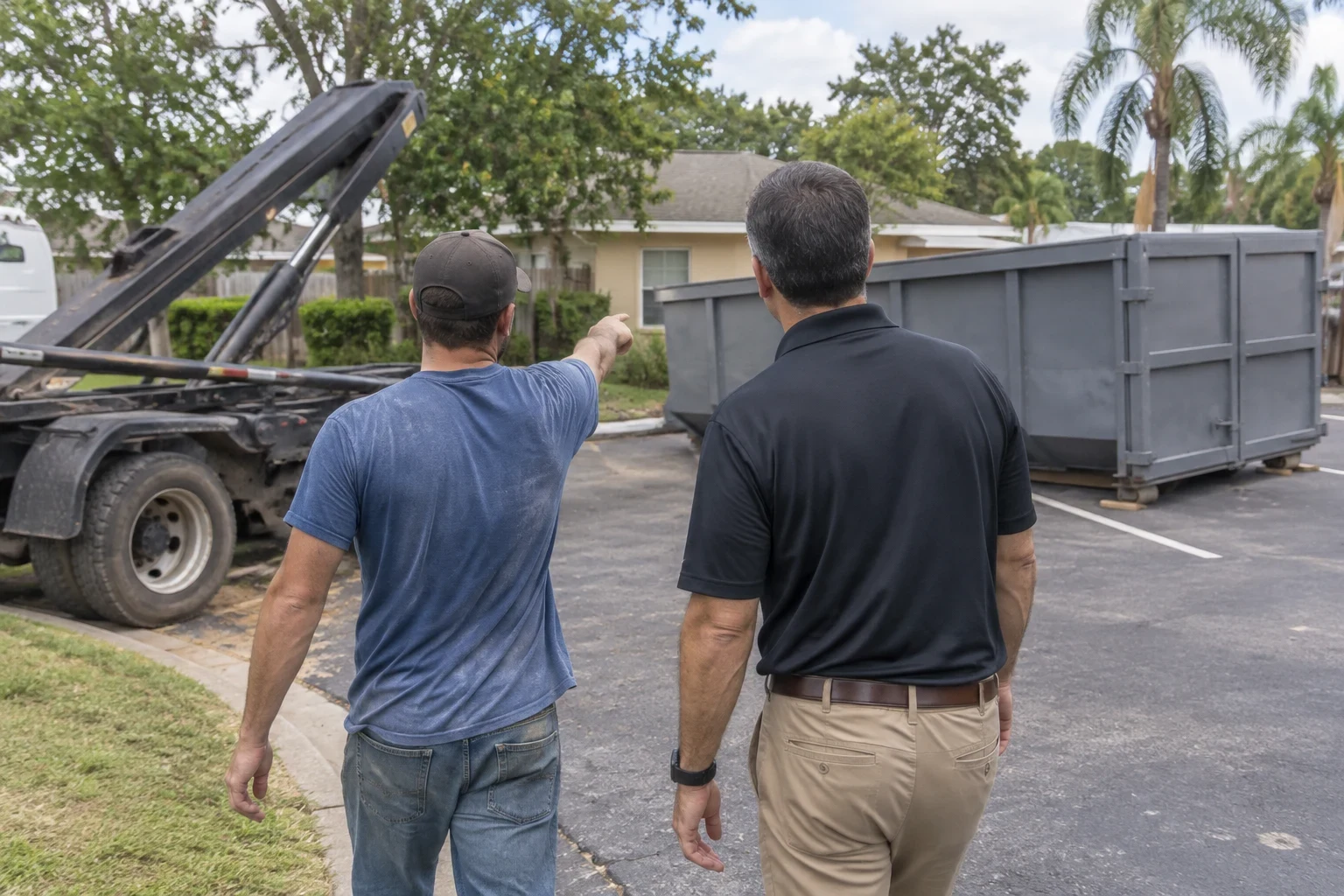
Our driver sets the dumpster in the agreed spot, checks clearance overhead and around it, and makes sure the door opens toward where you'll be loading.
- 3
Loading and swap-outs
Your crew loads as the work goes. When it's full, give us a call and we'll arrange to swap it so the site stays clear.
- 4
Final pickup and haul away
Once the project wraps, we pick up the last container and look over the drop spot for nails or scrap left behind.
Construction debris removal questions
Can I put concrete and tile in with the rest of my remodel debris?
Usually yes, but tell us before delivery. Concrete and tile are dense, so a container can hit its weight limit when it's only partly full. Knowing ahead lets us pick a size that's safe to lift and haul.
Will the dumpster damage my driveway?
A loaded container is heavy, so we talk about placement first. Level, solid ground works best, and boards under the rails help spread the weight. We'll point out any spot we think is too soft or sloped.
Do I need a permit for the container?
If it sits fully on your property, usually not. Placing it on a public street can require permission from the city or county. We'll go over your placement options when you call so you know where things stand.
What happens if the dumpster fills before the job is done?
Call us and we'll arrange a swap: we pick up the full container and drop an empty one. Please don't stack debris above the rim in the meantime, since loose material can fall off during hauling.
Can roofers use it for a shingle tear-off?
Yes. Shingles are one of the heaviest common loads, so let us know the number of squares and layers being removed. That helps us recommend the right size and placement near the roofline.
Plan a safer cleanup for your project
Tell us what's coming out and where the container can go. We'll recommend a size, explain the quote and set up delivery when you're ready.